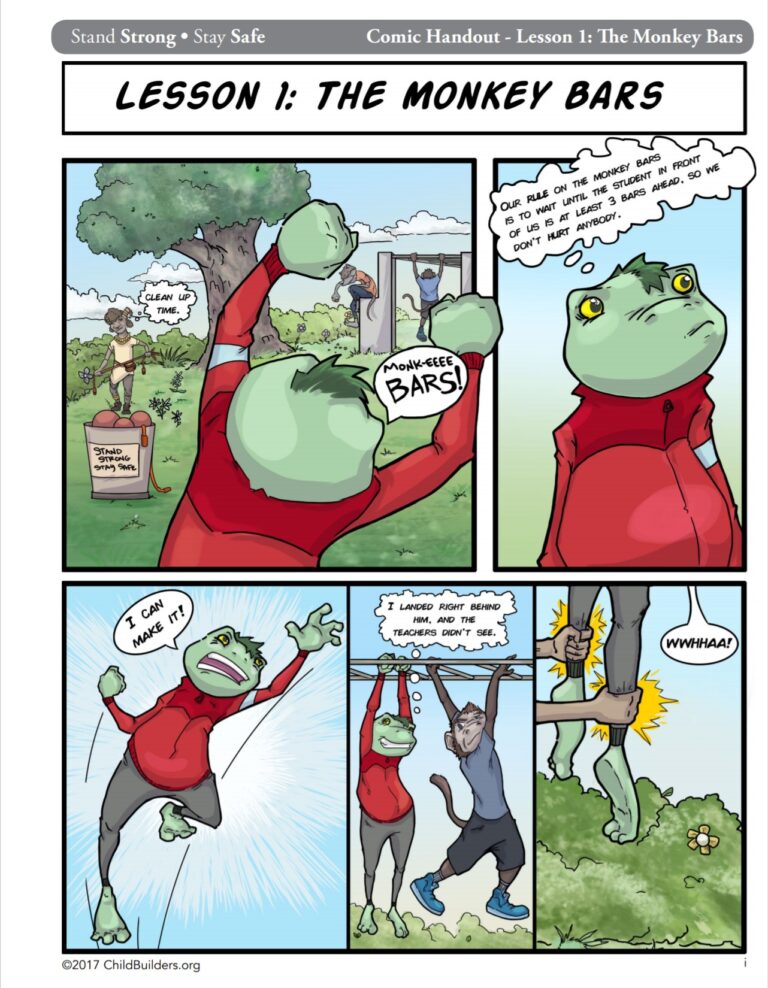
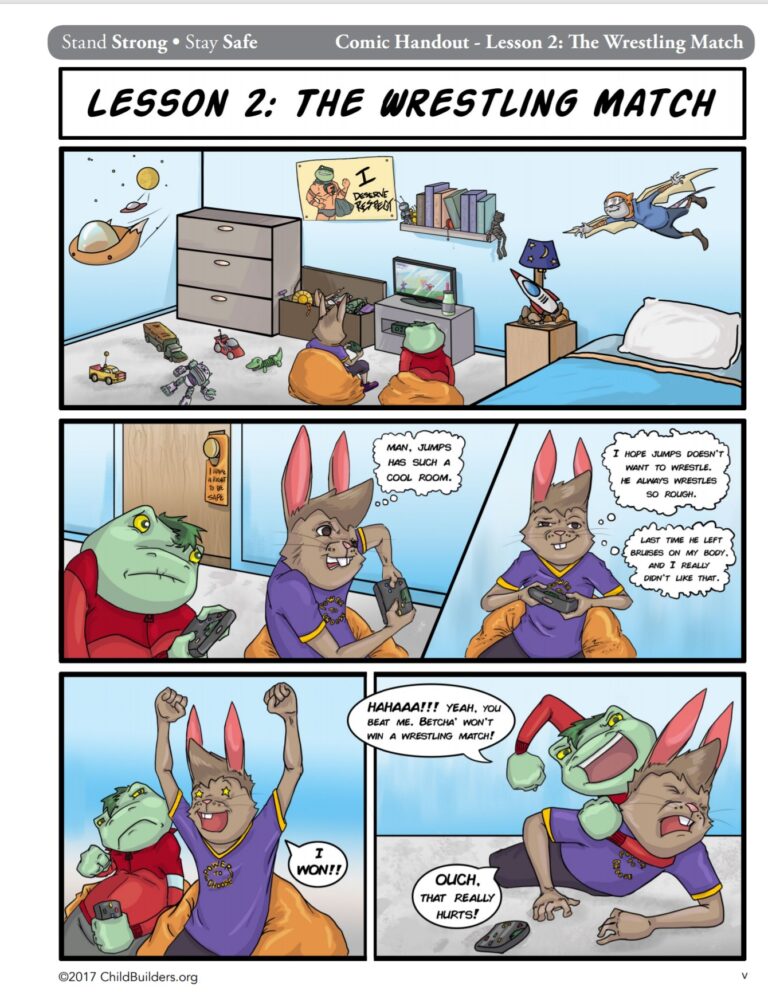
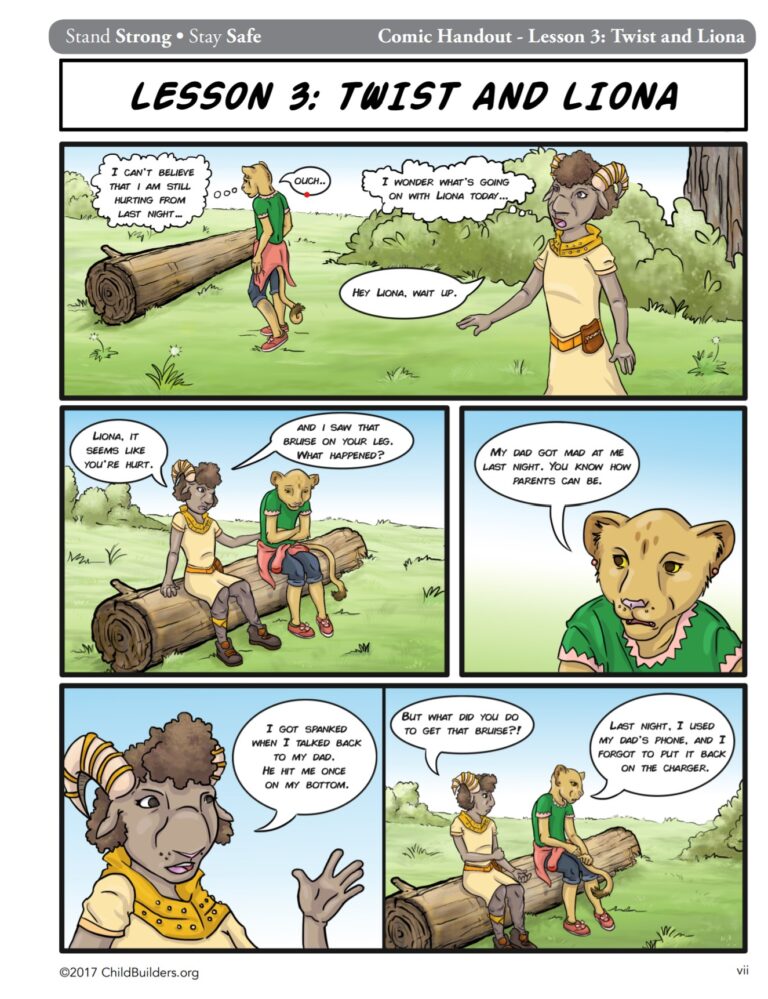
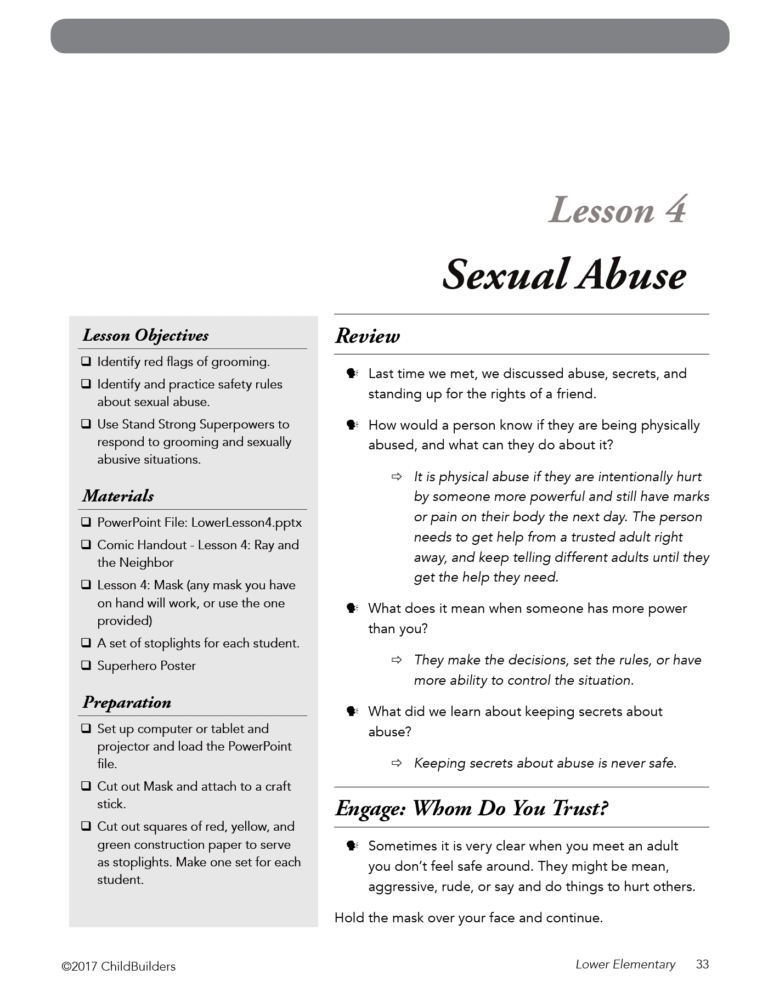
Lesson 2 introduces students to the concept of personal boundaries – the personal safety rules that each person sets for him or herself. Students are encouraged to recognize that everyone has their own unique set of boundaries, and to pay attention to boundary language. Students practice requesting, giving, and withdrawing consent, which are skills they can use when they are not sure whether an action will cross someone’s personal boundaries.
Lesson 3 presents students with the definition of abuse and gives them practice in differentiating abusive behavior from non-abusive behavior. Students discuss actions they can take to stay safe and get help when they experience or witness physical abuse.
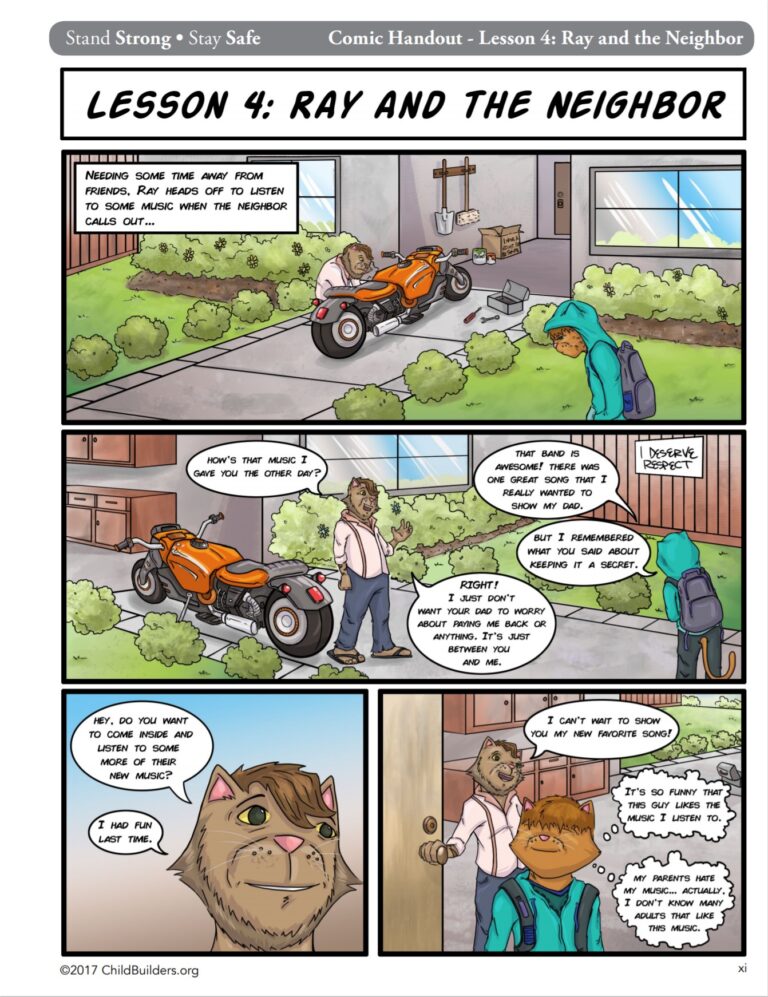
Lesson 4 presents an age-appropriate, non-graphic discussion of grooming and sexual abuse. Students learn strategies to identify possible grooming. They are led through a demonstration about private parts, followed by a set of safety rules that emphasize their bodily autonomy. The purpose of these discussions is to ensure that every student knows that they have a right to set and defend their sexual boundaries, how to get help if they or someone they know experience grooming or sexual abuse, and that they are never at fault if someone crosses their sexual boundaries. While the topic of child sexual abuse may be difficult for some students and adults to address, having direct discussions with elementary students about this topic provides effective protection against sexual abuse and promotes better mental health outcomes among children who do experience sexual victimization at any point in their lives (Finkelhor & Dziuba-Leatherman, 1995).
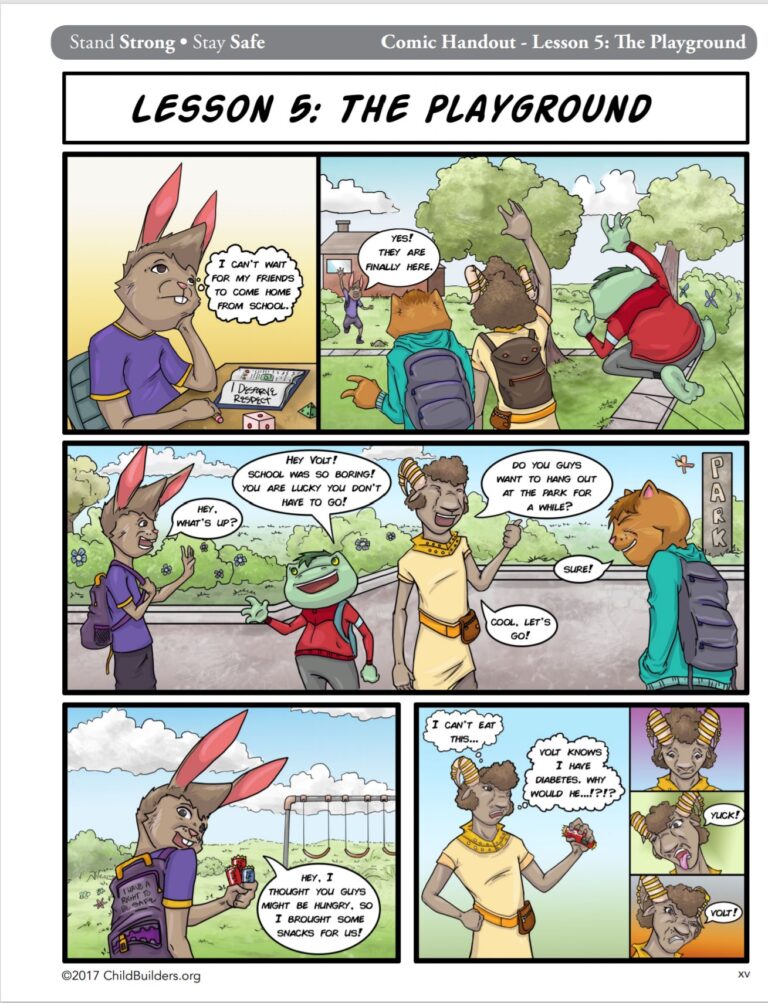
Lesson 5 addresses the issues of emotional safety and bullying. Students learn that emotional pain is as hurtful as physical pain, and that they have the right to be both physically and emotionally safe. Students discuss their responsibility to help keep their communities safe by being upstanders instead of passive bystanders when they witness bullying or emotionally unsafe behavior.
The message of Stand Strong • Stay Safe is simple:
I deserve respect (and so do my classmates/teachers).
I have the right to be safe (and I know what is safe).
I have the power to choose (and I can choose an assertive response).
I will get help (and I will keep telling until I get the help I need).
It is up to adults to keep children safe. Sadly, children must often handle unsafe situations on their own. Like a vaccine against disease, Stand Strong • Stay Safeprepares children to act as their own first line of defense against unsafe situations.
Stand Strong • Stay Safe – Elementary is a safety education curriculum that teaches 2nd-5th Grade children the assertiveness and emotional literacy skills they need to build positive communities, stand up for themselves, and get help when faced with unsafe situations. Through age-appropriate lessons, students are prepared to stay safe and get help when faced with bullying, emotional abuse, physical abuse, sexual abuse, neglect, and other challenges.
Stand Strong • Stay Safe - Lower Elementary
Lesson 1: Be Assertive
Lesson 2: Boundaries and Consent
Lesson 3: Physical Abuse
Lesson 4: Sexual Abuse
Lesson 5: Emotional Safety
This series must be taught prior to the Upper Elementary series, even if students are older.
Stand Strong • Stay Safe - Upper Elementary
Lesson 1: Safe Relationships
Lesson 2: Emotional Control
Lesson 3: Handling Conflict
Lesson 4: Stopping Abuse
Lesson 5: Stay Safe Online
The lessons in this series build on the learning that occurs in the Lower Elementary series and should be viewed as an extension. Learning progressions must cover the Lower Elementary series prior to teaching the Upper Elementary series.
About the Characters
The characters in the Stand Strong • Stay Safe comics are designed to connect with today’s elementary students. Each character faces a realistic challenge and demonstrates positive character strengths to solve problems in safe and respectful ways.
The characters reflect common situations that can increase a child’s risk for bullying or abuse, including behavior challenges, physical differences, or learning needs. By seeing diverse experiences represented in age-appropriate ways, students learn to recognize unfair treatment, respond safely, and support one another with respect and care.
Curriculum Includes
2 vertically aligned curriculum levels (Lower Elementary for 2nd-3rd grade and Upper Elementary for 4th-5th grade), each consisting of five 30- or 45-minute lessons
Presentations with video or stories featuring superhero characters, role-play, and discussion
Access to Parent Guide and Upper Elementary Home Connections.
Questions or Concerns?
Please use this form to get in touch with our team about curriculum access, tech support, or any other questions.